

Foam Medical Mattress Support Systems
Modern healthcare facilities require advanced patient support solutions that combine comfort with clinical functionality. Our foam medical mattress systems represent the pinnacle of therapeutic bedding technology, engineered to address the unique needs of hospital environments. These hospital mattress products work in harmony with specialized hospital bed pads to create a complete patient support system that promotes healing while meeting rigorous medical standards.
Superior Quality Hospital Mattress
Our hospital mattress solutions are engineered with precision to meet the highest medical standards:
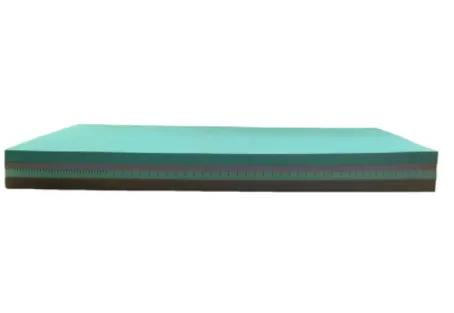
- Constructed with polyether and polyester mixed high-grade polyurethane foam for optimal softness and support
• Features a nest-like foam structure that adapts to body contours while maintaining durability
• Multi-layer design incorporates varying hardness levels to provide targeted pressure relief
• Ventilation holes enhance airflow, reducing heat buildup and moisture retention
• Exceeds national standards for hardness, rebound rate, and tear strength
|
Product Name |
ICU Care-ซิลิคอนเชลล์ 160 |
|
Standard Sizes |
1950×900×160mm (±5mm), customizable specifications |
|
Mattress Weight |
14 kilograms |
|
Load Bearing |
150 kilograms |
|
Core Material |
Polyether and polyester mixed high-grade polyurethane foam |
|
Cover Material |
Silicone cover for clinical care |
Advanced Foam Medical Mattress Technology
The foam medical mattress range combines innovation with patient comfort:
- Pressure-redistribution design minimizes risk of bedsores by promoting blood circulation
• Multi-density foam layers work in harmony to support different body weights effectively
• Open-cell foam structure allows for breathability while maintaining structural integrity
• Clinically proven to reduce patient discomfort and improve sleep quality
• Long-lasting performance with an expected service life of 5-8 years
Protective Hospital Bed Pads
Our hospital bed pads complement the mattress system with enhanced safety features:
- Waterproof and antimicrobial outer cover prevents fluid penetration and bacterial growth
• Two-way elastic fabric allows for easy movement while maintaining a secure fit
• Hidden zipper design enables quick removal for cleaning and maintenance
• Resistant to medical disinfectants including alcohol and sodium hypochlorite solutions
• Flame-retardant materials meet strict hospital safety regulations
Clinical Benefits of Our Mattress System
The hospital mattress provides tangible medical advantages:
- Direct invasive care capability due to bio-compatible materials
• ISO 10993 certified for medical device biological evaluation
• Passed rigorous irritation, skin sensitization, and cytotoxicity testing
• Ideal for patients at risk of pressure ulcers across clinical settings
• Silent operation ensures undisturbed patient rest
Durability and Maintenance
Our foam medical mattress is built for long-term performance:
- 1-year comprehensive product warranty
• 48-hour maximum maintenance response time
• Easy-to-clean surfaces withstand repeated disinfection
• Wear-resistant covers pass rigorous anti-fatigue testing
• Maintains structural integrity through extended clinical use
Safety Certifications and Testing
Every hospital mattress undergoes stringent quality verification:
- Polyurethane foam mechanical performance certification
• Flame retardant test compliance for foam and covers
• Formaldehyde-free environmental safety confirmation
• Antimicrobial efficacy testing documentation
• Pressure sensor validation for ICU applications
Hospital Mattress FAQS
Q: How do foam medical mattress options enhance patient comfort compared to standard hospital mattress models?
A: Foam medical mattresses often feature high-density viscoelastic or polyurethane foams that conform to the body, reducing pressure points—a key advantage over basic hospital mattresses with uniform firmness. Specialized foams may include gel infusions for temperature regulation or airflow channels to prevent moisture buildup, making them ideal for long-term care. Standard hospital mattresses prioritize durability, while foam variants balance support with comfort for improved patient outcomes.
Q: What infection control features should buyers look for in hospital bed pads and hospital mattress systems?
A: Both hospital bed pads and mattresses should have waterproof, impermeable covers to prevent bodily fluid penetration. Mattresses may include antimicrobial treatments in the foam core to inhibit bacterial growth, while bed pads often use hypoallergenic materials and are machine-washable for repeated sanitization. Look for products with seamless designs to eliminate crevices where pathogens could hide, and ensure pads have non-slip bases to maintain placement during patient movement.
Q: Can foam medical mattress models be customized for bariatric patients using hospital mattress frames?
A: Yes, many foam medical mattresses offer bariatric options with enhanced weight capacity (often 500+ lbs) and reinforced edges to prevent sagging. These mattresses may use dual-layer foam systems—denser base foams for structural support and softer top layers for pressure relief—compatible with standard hospital mattress frames. Ensure the frame’s weight rating matches the mattress, and consider additional features like anti-shear surfaces to minimize skin irritation in larger patients.
Q: How does the maintenance of hospital bed pads differ from that of foam medical mattress units?
A: Hospital bed pads require frequent laundering (daily for incontinence use) in hot water with disinfectant detergents to prevent odor and microbial buildup. Reusable pads should be checked for wear on seams and waterproof layers, while disposable ones are discarded after use. Foam medical mattresses, meanwhile, need regular surface cleaning with hospital-grade disinfectants, and their covers should be removed and sanitized per manufacturer guidelines. Avoid saturating foam cores with liquids, as this can compromise internal structure and create mold risks.
Q: Are there eco-friendly options available for hospital mattress, foam medical mattress, and hospital bed pads?
A: Yes, some manufacturers offer hospital mattresses with plant-based foam components or recycled steel springs, while foam medical mattresses may use bio-based polyurethanes. Hospital bed pads can be made from recycled polyester or organic cotton blends, and reusable pads reduce waste compared to disposable ones. Look for certifications like OEKO-TEX® for non-toxic materials or GRS (Global Recycle Standard) for products with recycled content, balancing sustainability with medical-grade performance.
-
What Is the Pressure Redistribution Capability of Silicone Mattresses?ข่าวNov.17,2025
-
How Do You Clean and Disinfect a Silicone Hospital Mattress?ข่าวNov.17,2025
-
Sleep Monitoring Mattress Calibrationข่าวSep.04,2025
-
Pressure Relieving Foam Mattress Waterproof Coversข่าวSep.04,2025
-
Cool Gel Mattress Ambulance Useข่าวSep.04,2025
-
Coir and Foam Mattress Minimalist Livingข่าวSep.04,2025
-
Bed Mattress for Back Pain Emergency Useข่าวSep.04,2025
 English
 Afrikaans
 Albanian
 Arabic
 Armenian
 Belarusian
 Bengali
 Bulgarian
 China
China
 Czech
Czech
 Danish
 Dutch
Dutch
 Esperanto
 Finnish
 French
 German
 Greek
Greek
 Hawaiian
 Hebrew
 Hindi
Hindi
 Hungarian
 Indonesian
 Irish
Irish
 Italian
 Japanese
 Kazakh
 Rwandese
 Korean
 Lao
Lao
 Latin
Latin
 Maori
Maori
 Mongolian
 Myanmar
 Nepali
 Polish
 Portuguese
 Romanian
 Russian
 Serbian
 Slovak
 Slovenian
 Spanish
 Swedish
 Tagalog
 Tatar
Tatar
 Turkish
 Ukrainian
 Urdu
Urdu
 Uighur
 Uzbek
Uzbek
 Vietnamese
 Thai
Thai